Fire protection for restaurants & commercial kitchens
Class K coverage behind the line, hood system awareness, and staff who know the difference.
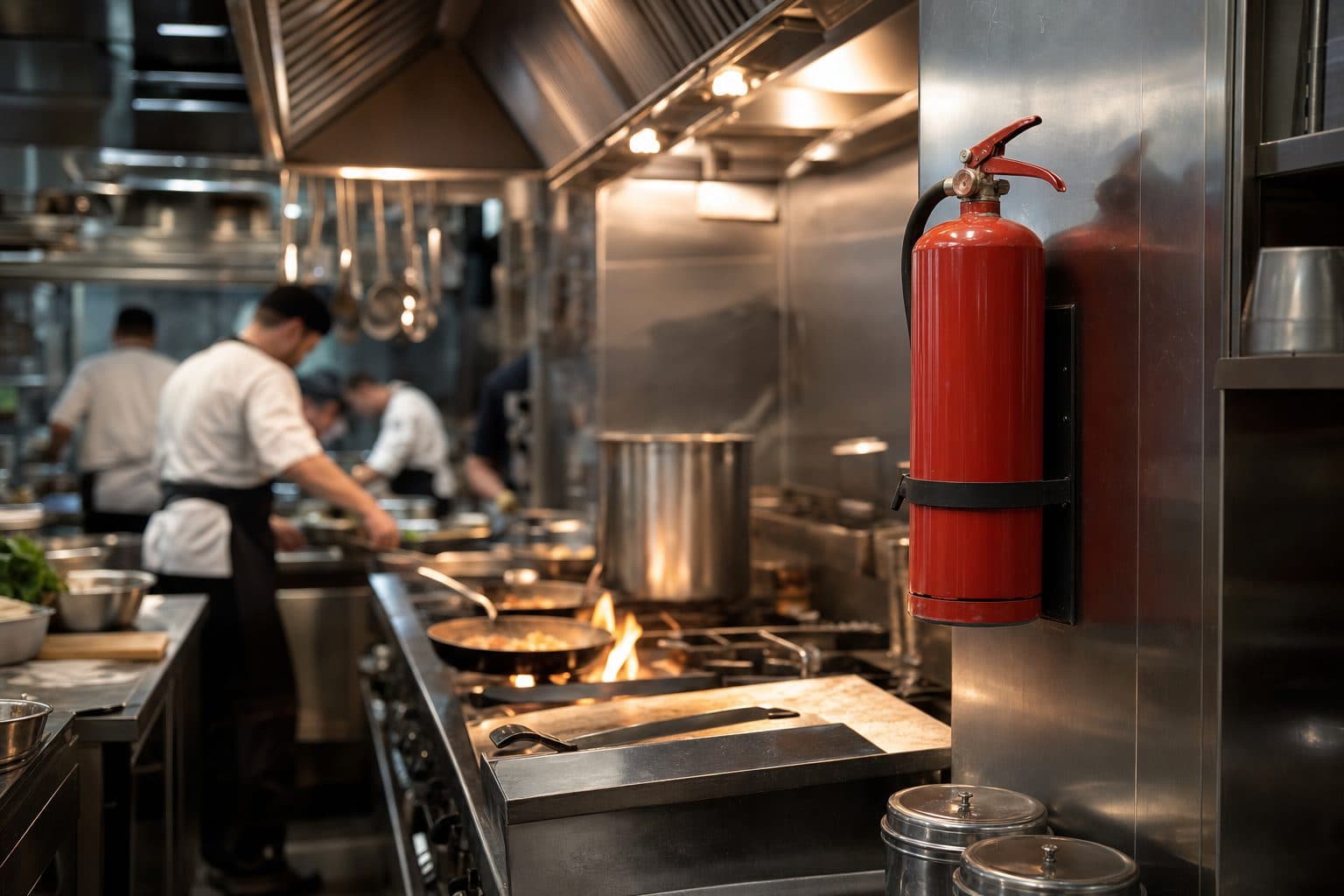
What we focus on here
- Class K wet chemical within reach of the cooking line
- Hood suppression system awareness and coordination
- ABC coverage in the dining room, storage and back of house
- Staff who know not to reach for water on a grease fire
Fire safety guide
Restaurant Fire Safety Tips for Kitchens and Dining Areas
Restaurant fire safety starts at the cooking line. Grease, open flame, hot equipment, and fast-paced shifts make clear procedures and maintained suppression equipment essential.
Protect the cooking line
Commercial cooking equipment that produces grease-laden vapors needs a listed hood and duct suppression system designed for the appliances beneath it. Keep appliance layout consistent with the system’s approved design.
- Keep nozzles aimed at the protected appliances.
- Do not move or add equipment without reviewing suppression coverage.
- Keep manual pull stations accessible and clearly identified.
Use the correct extinguisher
Place a Class K wet chemical extinguisher for commercial cooking oil and fat hazards as required by the applicable standard and AHJ. General ABC units serve other areas but are not a substitute for Class K protection at the line.
Control grease before it becomes fuel
Follow the hood cleaning schedule appropriate to your cooking volume and grease load. Clean grease from filters, accessible surfaces, fryers, floors, and behind appliances without allowing residues to build up.
- Filter and handle fryer oil using your written procedure.
- Store clean towels away from hot equipment.
- Keep cardboard and packaging out of cooking and utility areas.
- Check gas shutoff access at opening and closing.
Make the response routine
- 1Alert the team — Call out the emergency, activate the alarm procedure, and call 911.
- 2Shut down only if safe — Use the hood system or emergency fuel shutoff as trained; do not delay evacuation to do so.
- 3Use Class K only for a small cooking fire — Maintain an exit route and stop if the fire is spreading or smoke is heavy.
- 4Evacuate and account for staff — Move guests and employees to the assembly point and meet responders.
Train every shift, including dish, prep, front-of-house, and delivery staff. The person nearest the fire may not be a cook.
Keep service records ready
Maintain records for hood suppression inspections, hood cleaning, fire extinguishers, employee training, and corrective work. Your local Tennessee AHJ may request records or require a different interval.
Read this guide on its own page, or browse the full fire safety library.
No reason to delay
Submit one short form and we will give you a free, guaranteed, exact-price bid before we do any work.