Fire protection for offices & professional buildings
Clean coverage on every floor, correct travel distances, and tags that never lapse.
What we focus on here
- Correct travel distances on every floor and stairwell
- CO2 units for server closets and electrical rooms
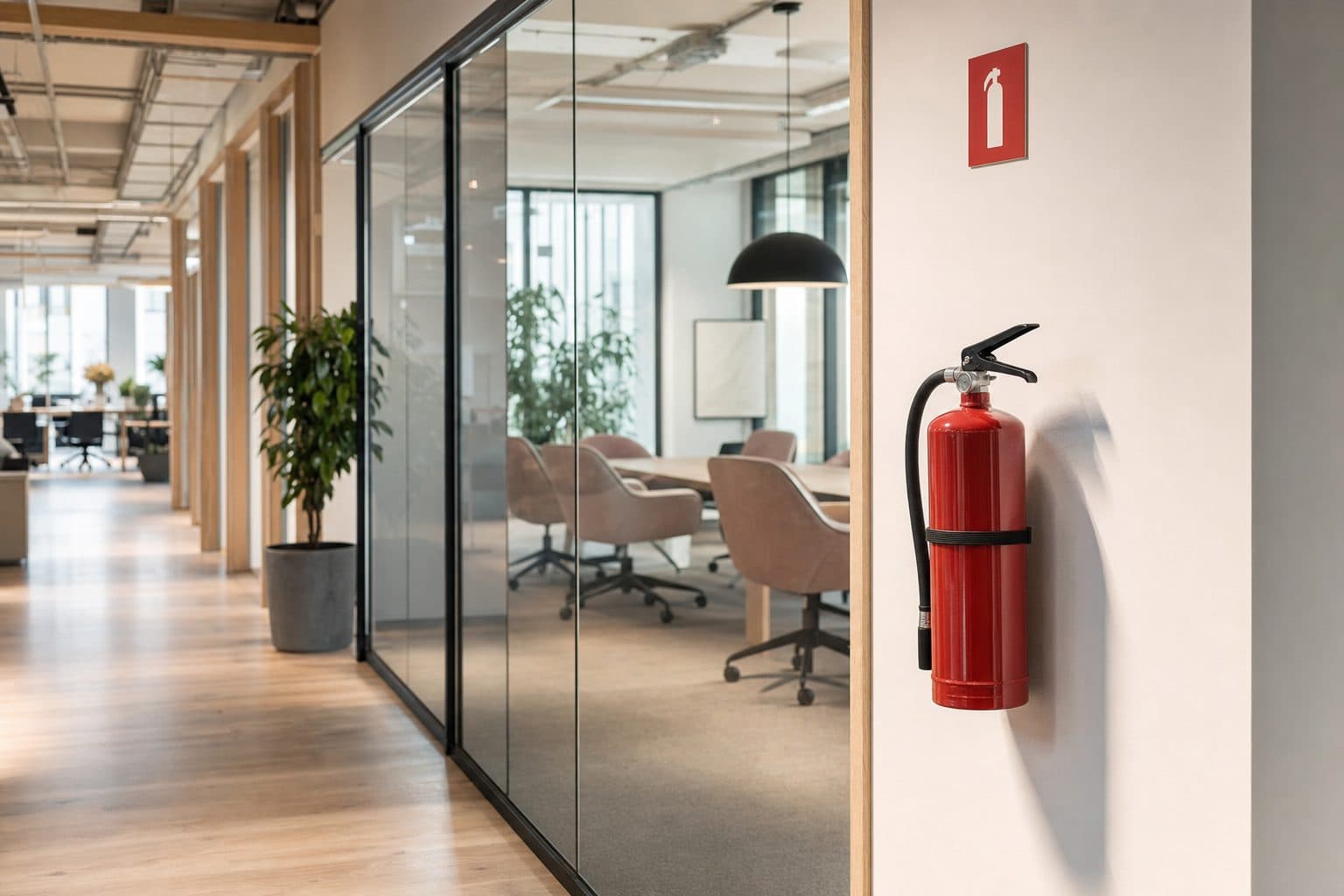
- Cabinets and signage that stay visible in finished space
- Tags that never lapse during a lease or insurance review
Fire safety guide
Office Fire Safety Tips for Small and Growing Teams
Offices usually have lower fuel loads than industrial spaces, but overloaded power strips, break rooms, storage, and blocked exits create preventable risk.
Manage electrical equipment
Use listed power strips as intended and avoid daisy-chaining strips or extension cords. Remove damaged cords, loose plugs, and equipment that runs unusually hot from service.
- Keep vents on computers and printers clear.
- Do not run cords under rugs or across egress paths.
- Use dedicated circuits for high-load equipment as required.
Keep break rooms and storage orderly
Unattended cooking, cardboard storage, and space heaters are common office concerns. Keep combustible storage away from electrical panels, mechanical equipment, and heat sources.
Protect exits and extinguisher access
Never use corridors, stair doors, or exit discharge areas for temporary storage. Keep extinguishers visible and accessible even during deliveries, office moves, and events.
- Check exit doors open freely.
- Keep exit signs and emergency lighting unobstructed.
- Confirm extinguisher paths are not blocked by furniture or boxes.
Give employees a simple emergency routine
- 1Sound the alarm — Use the building procedure and call 911 when a fire or smoke condition is discovered.
- 2Take the nearest safe exit — Do not use elevators during a fire emergency.
- 3Go to the assembly point — Supervisors should account for employees and visitors.
- 4Do not re-enter — Wait for the fire department or building management to authorize re-entry.
Assign responsibilities for visitors, employees who may need assistance, and after-hours workers. Revisit the plan when the suite layout changes.
Maintain the protection you have
Complete monthly visual inspections and schedule annual extinguisher maintenance under NFPA 10 (2022 Edition). Verify local Tennessee AHJ requirements for your occupancy and building.
Read this guide on its own page, or browse the full fire safety library.
No reason to delay
Submit one short form and we will give you a free, guaranteed, exact-price bid before we do any work.